When I started my PhD, I realised I wasn't just beginning a research project - I was continuing a journey that had started many years earlier. I was the first person in my family to attend university. My father worked as a motor mechanic and my mother ran a small business before they retired. In the community where I grew up in Cameroon, girls' education was not always prioritised, although this is gradually changing through years of advocacy. Despite limited financial means and many challenges, my parents were determined that I should stay in school. Their belief in the value of education laid the foundation for everything that has followed.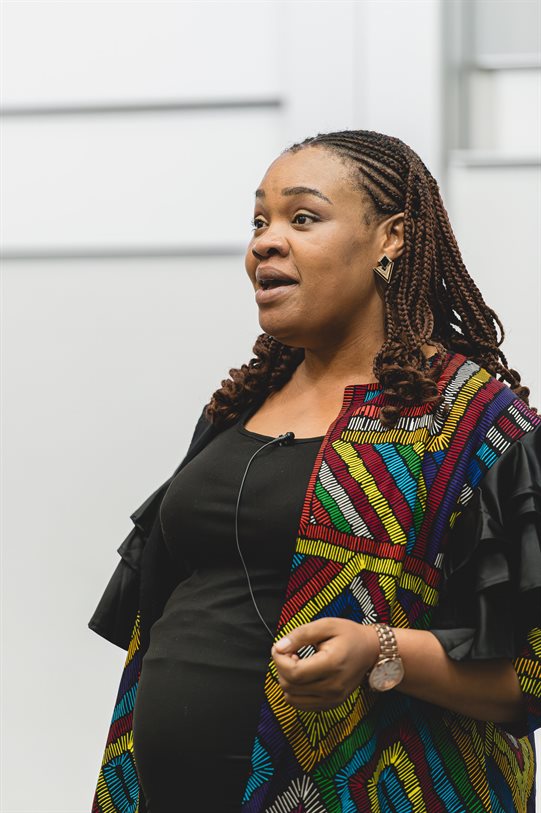
I completed my undergraduate degree in 2007 while becoming a young mother. Twelve years later, I returned to university to study for a Master's in Conflict, Security and Development. During that time, I founded Hope for the Needy Association to support girls, particularly teenage mothers, to remain in education. My Master's research explored the role of grassroots women leaders in peacebuilding in Cameroon and reinforced my belief that lasting change begins by listening to communities and valuing lived experience.
Later, while working in adult social care in England, I encountered dementia in a way I never had before. Growing up, memory loss in older people was simply considered part of ageing. Looking back, I often think about my grandfather and wonder whether he was living with dementia. That realisation led me to my NIHR-funded PhD at the University of Birmingham, where I now explore how voluntary and community organisations support people from Black and Minority Ethnic communities living with dementia.
The PhD has transformed me in ways I never expected. It has changed how I think, how I listen, and how I approach challenges. One day, my son said, "Mum, you've changed. You reflect a lot." He was right. Research has taught me to pause before searching for answers, ask better questions, and see uncertainty as part of learning.
Returning to academia after a twelve-year break while raising four children has been both rewarding and challenging. Throughout this journey, I have been supported by my family, supervisors, and fellow researchers. Their encouragement has reminded me that asking for help is not a weakness but an important part of becoming a researcher.
Looking back, I realise that every stage of my journey has been connected by the same purpose: creating opportunities for people whose voices are too often unheard. Whether supporting girls to remain in education, researching grassroots women in peacebuilding, or exploring dementia within minority ethnic communities, I have always been driven by a desire to understand people's lived experiences and work alongside them to influence meaningful change.
If I could offer one piece of advice to another PGR, it would be this: embrace the transformation. A PhD is about far more than producing a thesis. It changes the way you think, challenges your assumptions, and shapes the person you become. Trust the process, lean on your support network, and remember that your growth as a researcher is just as important as the research itself.